The New Reality: C-Suite IR Responsibilities Following an IPO

Going public is a milestone—validation of your company’s growth, business model, and future potential. But for executive teams, the IPO isn’t the finish line. In fact, it marks the beginning of a new chapter of ongoing investor relations (IR) responsibilities.

While the IPO process is intensive and time-consuming, what follows is an entirely new set of investor relations (IR) responsibilities that require ongoing time, focus, and preparation. From quarterly earnings calls and sell-side conferences to engagement with actual investors, newly public companies are expected to maintain a constant dialogue with market participants—and that dialogue starts with the CEO and CFO.

At Gilmartin, we work with executive teams to help them manage these commitments efficiently and strategically. Here’s what to expect as a newly public management team and how to prepare to build long-term credibility in the public markets.


1. Quarterly Earnings: The New Cadence

Public company life is structured around the calendar, and nothing defines that structure more than quarterly earnings. For CFOs and supporting finance teams, each quarter brings an intensive close and reforecast cycle, followed by meticulous preparation for earnings announcements and conference calls. This includes:

  • Drafting and reviewing the press release and conference call script
  • Preparing detailed responses to anticipated questions
  • Conducting callbacks with sell-side analysts
  • Hosting scheduled and unscheduled calls with top shareholders

It’s a high-stakes process where clarity, consistency, and confidence in messaging can shape investor perception and influence valuation over time.


2. Investor Conferences and NDRs: Time on the Road

In the first year post-IPO, plan to attend most—if not all—healthcare investor conferences hosted by your IPO syndicate banks. These events often involve:

  • Travel and overnight stays
  • A full day of one-on-one and/or group investor meetings
  • A fireside chat or formal presentation with the covering analyst
  • Additional investor networking and business development opportunities

Early CEO and CFO participation is crucial for building credibility and cultivating long-term relationships. Over time, additional senior team members may represent the company, but executive involvement early on is key.

Non-deal roadshows (NDRs) are another key aspect of investor engagement. These investor meetings, hosted in selected cities, help you stay visible between conferences, target potential new shareholders, and strengthen relationships with covering analysts — especially when conference scheduling conflicts arise.


3. Market Education: A Continuous Process

Not all management teams fully appreciate that the IPO roadshow and testing-the-waters meetings are just the beginning of the investor education process. As your company’s public profile grows and you begin reporting financial performance against guidance, interest from new investors and sell-side analysts will likely increase. Earning the attention and trust of high-quality shareholders requires consistent engagement from the CEO, CFO, and IR team—but that investment of time can lead to broader ownership, stronger relationships, and even multiple expansion. Follow-on offerings and secondary transactions often bring new shareholders into the mix, and it’s critical that management remains involved to ensure a smooth transition and ongoing alignment.

Educating new and existing investors and sell-side analysts becomes a significant part of the CEO, CFO, and IR calendar. Higher-quality investors and sell-side analysts may require 2-3 introductory meetings as well as a headquarter visit to meet the CEO and CFO face-to-face. After the initial diligence process, some investors will want to engage quarterly; others may prefer annual or biannual touchpoints. Responsiveness matters, but with limited executive bandwidth, thoughtful prioritization of investor outreach is essential.


4. Hosting an Analyst Day: Telling the Bigger Story

Within 2–3 years of your IPO, it may be time to consider an analyst day. This is your opportunity to go beyond quarterly results and articulate your long-term vision, growth strategy, and operational priorities.

But don’t underestimate the effort: Analyst days require a 6-month planning process involving IR advisors and coordination across the executive team. The upside? It’s one of the most effective ways to deepen investor understanding and expand your shareholder base. A well-executed analyst day with clear messaging and objectives builds credibility and supports relationship development with key stakeholders.


5. Why It Matters: Building Long-Term Value
The public markets offer compelling benefits — access to public capital, increased brand visibility, and enhanced liquidity for shareholders. But they also require discipline, transparency, and ongoing engagement with the investment community.

At Gilmartin, we help our clients navigate these new demands, build credibility with Wall Street, and manage executive’s time effectively. While every executive will need to dedicate time to IR, our role is to ensure those commitments are purposeful, efficient, and aligned with the broader goal: running and growing a successful business.


Final Thoughts

Becoming a public company isn’t the end of a journey — it’s the beginning of a new one. The expectations of public company executives go well beyond financial results. Strategic IR is about building trust, telling your story, and forging relationships that support your long-term vision.

Reach out to our team to learn more about how we partner with our clients.

Authored by: Erik Abdow (Vice President), Gilmartin Group
Surviving the Squeeze: Creative Capital Raising Strategies for Biotechs in a Risk-Off Market

On June 24th, Gilmartin Group’s Founder, Lynn Lewis, and Principal, Kiki Patel, PharmD moderated a discussion with the Jefferies Investment Banking team including Bryan Czyzewski, Managing Director of Investment Banking and Jack Fabbri, Managing Director of Equity Capital Markets, who bring deep expertise at the intersection of biotech innovation and capital markets. They addressed capital raising strategies in a risk-off market, sharing real-world financing strategies and exploring how management teams can build the optimal toolbox to implement actionable approaches that enable them not only to survive but to thrive amidst the squeeze.


Resilience and Realism: Biotech’s Path Through Market Uncertainty
Biotech innovation continues to advance despite capital market challenges, with scientific breakthroughs, clinical progress, and commercialization efforts moving forward amid rising interest rates, regulatory ambiguity, and global macroeconomic shifts. In this environment, understanding how deals are getting done and exploring the full range of financing options is more important than ever. Investors still have capital to deploy but are increasingly selective, favoring later-stage, revenue-generating companies with validated data and downside protection. Early-stage companies face heightened scrutiny and must clearly demonstrate clinical or strategic value to secure funding. At the same time, pressure on large pharma to replenish pipelines as key patents expire is sustaining demand for innovation, helping to support capital inflows into the sector.


Creative Financing Strategies: Biotech’s Evolving Toolbox for Navigating Market Challenges
As capital markets remain constrained, biotech companies are increasingly turning to creative financing strategies to fund operations and advance pipelines.

1. Catalyst-driven financings
There’s been a notable rise in catalyst-driven financings, where companies align capital raises with major data announcements or corporate milestones. Over half of follow-on financings this year have followed this model, with many executed concurrently launched the same day as the news. These “breakfast launches” or PIPE-like deals often involve pre-market data releases, rapid pricing, and same-day trading. This structure allows companies to engage with select investors in advance via wall-crossing, providing more control over the investor mix and helping to avoid the perception of a prolonged financing overhang.

2. At-the-Market offerings (ATMs)
ATMs have become an increasingly popular tool, at times comprising nearly half of all biotech financings. Their key advantage is flexibility: companies can raise capital incrementally at prevailing market prices without undertaking a large, marketed transaction. This makes ATMs especially effective in response to reverse inquiries or opportunistic market windows.

3. Convertible Debt & Royalty Monetization
Convertible debt remains a favored option for companies nearing or generating revenue, offering a way to defer equity dilution while accessing capital. These instruments are well-suited for CFOs and CEOs managing financing in volatile conditions. Meanwhile, royalty monetization is gaining traction as an alternative route to unlock asset value, most recently highlighted by Revolution Medicines’ deal on June 23, 2025. Though technically dilutive, these deals shift the impact away from immediate equity issuance and instead affect the P&L or balance sheet, providing a more strategic and less immediate form of dilution.


Why Debt isn’t the Answer for Biotech’s Cash Crunch

In today’s market, debt is rarely a practical financing option for biotech companies especially early-stage ones. The high-risk nature of drug development and low success rates make traditional lenders cautious, leaving equity as the preferred path for most. While later-stage companies with near-term catalysts may access debt in limited cases, it typically only works when there’s strong management conviction, a clear milestone path, and favorable structure. With cash reserves shrinking and capital scarce, debt alone won’t close the funding gap. Instead, companies must consider all options including non-dilutive capital and sometimes accept imperfect equity raises to reach critical milestones and preserve long-term viability.


Insiders Can’t Do It Alone: Attracting Fresh Capital
Insider support is often key in IPOs especially in a muted market but launching without coverage from existing investors or new ones identified through testing the waters is tough. In follow-ons, that support still matters, but won’t carry a deal alone. Nearly 40% of public biotechs were trading below $25M in enterprise value as of March and April, making it unrealistic to expect existing investors to back every deal. While signals like reverse inquiries or large insider participation are helpful, they’re not enough to close a transaction. Companies need to stay visible, engage new investors early, and use IR strategically to be ready when the time comes.


Money is Green: Unlocking International Capital
Sovereign wealth funds and global family offices offer deep pockets and long-term capital, but accessing that funding comes with tradeoffs. These groups are often generalists with slower decision-making processes, making them less suited for fast-moving transactions like overnight deals. They may also be out of step with current biotech market conditions, holding valuation expectations that can delay or derail financings. Many (especially in Europe) prefer larger market cap companies often $1B+ and require specific liquidity thresholds or lengthy internal approvals, putting smaller-cap biotechs at a disadvantage. Still, given the current funding landscape, no source of capital should be overlooked in a thoughtful investor relations or capital-raising strategy.


M&A Momentum in 2025: As LOE Squeezes Pipelines, Innovation Demand Rises and China Offers a New Frontier for Pharma Deals
With many companies off their 52-week highs and the cost of capital climbing, management teams are increasingly weighing the path to development and commercialization against strategic alternatives. Recent high-profile acquisitions by Big Pharma highlight a growing appetite for innovation, driven in large part by looming loss of exclusivity (LOE) and the urgent need to replace revenue. As the IPO market remains challenging, expect continued momentum in M&A activity especially cross-border transactions fueled by China’s expanding innovation engine and appetite for global partnerships.


Zombie Biotechs: Time to Wake Up or Wind Down
Biotechs trading below cash are under increasing scrutiny for continuing operations without meaningful pipeline progress. When lead programs fail and few viable assets remain, management teams acting as fiduciaries must evaluate strategic options such as in-licensing, pursuing a reverse merger, or returning capital to shareholders. Several companies have navigated this process in an orderly manner, avoiding boardroom conflict, but investor involvement is intensifying. Shareholders are more frequently building positions and pushing for capital returns when they believe the process is stalled or misaligned. As a result, return-of-capital discussions are becoming a more routine and expected check on corporate strategy in today’s market.


Valuation Blues: Is Consolidation a Cure or a Crutch?
Valuations have generally come down due to a tough macroeconomic environment and liquidity concerns. While some biotechs may not secure funding, losing one company doesn’t necessarily boost the value of others. The health of the biotech sector depends more on positive data, M&A activity, returning capital to shareholders, and favorable regulatory or policy developments than on consolidation. Though consolidation can happen naturally where there are pipeline overlaps or synergies, biotech remains a numbers game: having more companies means more chances for success. That said, the sector is still experiencing a hangover from the COVID funding surge, where many ideas and companies were launched without strong product potential. In short, consolidation alone isn’t the key to resetting valuations or improving the overall health of biotech.


The Return of the IPO Market
A healthy IPO market is vital to broader capital markets, and there remains a solid backlog of companies eager to go public. While it’s difficult to predict whether the window opens in 3, 6, or 12 months, it will open and the key is to be ready. Companies should stay current on audits, maintain strong corporate governance, and prepare materials like a draft box summary to shorten the IPO timeline. You don’t need a full S-1, but early prep can cut filing time in half and allow for confidential submissions and testing the waters. Engaging advisors helps refine strategy as market dynamics shift, and IR firms play a critical role in keeping companies visible through conferences and proactive investor engagement. A differentiated story and consistent investor touchpoints will be essential when the opportunity returns.


Biotech companies must take a holistic approach to managing their capital structure, carefully balancing dilution with the timing of financings around key value-driving milestones. In this industry, data serves as the essential currency that drives investor interest and builds long-term value. However, successfully communicating this value and timing capital raises requires deep market knowledge and strong investor relationships. This is where experienced investor relations firms prove invaluable in helping management teams navigate funding decisions, optimize timing, and build compelling equity narratives that resonate in a complex and competitive market.

Reach out to our team to learn more about how we partner with our clients.

Authored by: Rachna Udasi (Associate) & Kiki Patel, PharmD (Principal), Gilmartin Group

Understanding the SEC Form S-1 Filing Process for Going Public

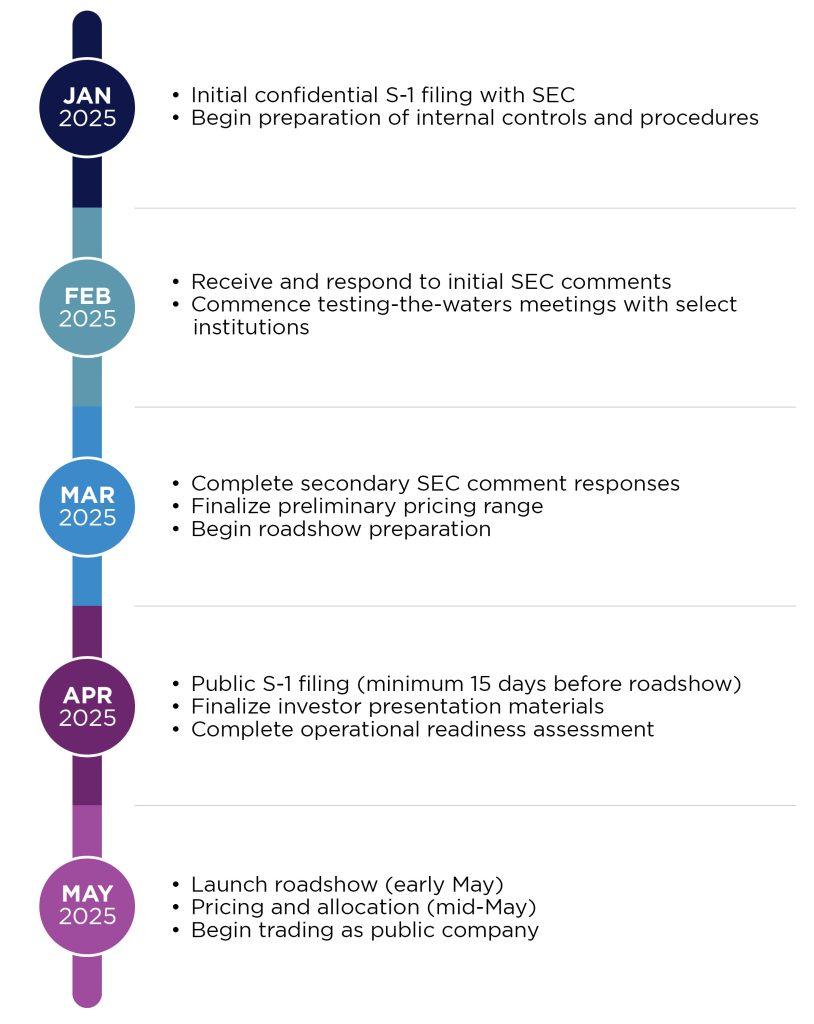
As your company prepares to transition to public markets, understanding the SEC Form S-1 filing process is essential to ensure a smooth and successful IPO. This blog post highlights key considerations for confidential filings and outlines a strategic timeline for a mid-May 2025 offering.


Advantages of Confidential Filing in the SEC Form S-1 Filing Process:
Following the SEC’s rule change in 2017, all private companies are now allowed to file Form S-1 confidentially, which presents several strategic benefits. This approach empowers management to maintain control over the IPO process while reducing market exposure. A confidential filing allows your company to engage privately with institutional investors, receive feedback from the SEC without public scrutiny, and retain strategic flexibility concerning timing and execution.


Strategic Benefits:

  1. “Testing the Water”
    Executive teams can hold preliminary discussions with institutional investors while keeping these conversations confidential. This approach allows them to gain valuable market feedback without making a public commitment. To support these efforts, understanding 13F filings can help your team gain insight into investor positions and priorities.
  2. Regulatory Dialogue
    Your company can privately address comments from the SEC and refine its disclosures, leading to a more polished public filing. Consider Hiring an Outside Writer for Your S-1 to ensure clarity, compliance, and consistent messaging.
  3. Information Control
    Critical business and financial information can remain private until the company decides to proceed, providing a significant competitive advantage. These advantages underscore the importance of using a confidential approach within the SEC Form S-1 filing process, giving your company flexibility while managing risk.

Transition to Public Filing
The transition from confidential to public status is a pivotal moment in the SEC Form S-1 filing process. It requires careful consideration of timing and communication strategy. For a more technical overview of the IPO process and regulatory considerations, you can refer to Harvard Law’s guide to the U.S. IPO process—a helpful supplement for legal teams and compliance officers. Your company must

  • File public documents minimum 15 days before roadshow initiation
  • Implement strict communication protocols to maintain SEC compliance
  • Establish clear spokesperson designation and media response procedures
  • Develop comprehensive communication strategies to prevent potential SEC violations

To avoid potential pitfalls during this stage, ensure all insiders understand trading restrictions—our Insider Trading Basics article can help your team stay compliant.

For a deeper look into timing and disclosure strategy, read our guide on What Happens When Your S-1 Flips to Public from Confidential.


Proposed Timeline for May 2025 IPO:


Critical Success Factors:
Careful planning throughout the SEC Form S-1 filing process is essential to ensure compliance, market confidence, and IPO readiness. Your company’s successful transition to public markets requires careful attention to regulatory compliance, stakeholder communication, and market timing. Engaging experienced advisors early in the process can help navigate complex regulatory requirements while maintaining strategic flexibility throughout the IPO process.

As you plan your journey toward the public markets, work closely with your strategic advisors and IR team. A comprehensive strategy that balances company objectives with tactical execution before, during, and after the offering is key to long-term success. Consider your investor engagement beyond the IPO as well—our Tips for Planning a Successful Investor Day can help you build lasting relationships with the Street.

Gilmartin Group supports companies at every stage of the SEC Form S-1 filing process, from confidential filing to post-IPO communications. Gilmartin Group partners with healthcare and life sciences companies at every step of the IPO process, providing expert guidance and support to ensure a success. To find out more about how we partner with our clients, please contact our team today.


Authored by: Greg Chodaczek, Managing Director, Gilmartin Group

2025 Biotech Outlook: To JPM and Beyond

It’s that time of year again. With 2024 at a close, healthcare investors, analysts, bankers, and management teams are finalizing their JPM meeting wish lists and preparing to migrate to San Francisco.

As teams navigate the flurry of data, pitches, and proposals, we expect the following themes to contextualize the majority of biotech discussions around Union Square:

  1. Impact of the New Administration
  2. Interest Rates
  3. The IPO Window
  4. M&A Activity
  5. The Obesity Market

Impact of the New Administration
Though the XBI reached a 2-year high following the 2024 presidential election, it rapidly sold off following the cabinet nominations of Kennedy for HHS and Oz for CMS. While these selections have raised concerns around potential agency disruptions and contributed to increased biotech volatility, investors continue to seek to better understand nominees’ priorities and parse political theater from true impact. While the impact of the IRA has been relatively modest to date, we await more clarity on any changes the new administration may make to its implementation, and the potential longer-term risks to the sector. On a more optimistic note, the nomination of Ferguson to lead the FTC is expected to result in a more business-friendly regulatory environment, potentially spurring more – and more expedient – biotech M&A. Together with the potential for further interest rate cuts, less resistance from FTC could result in a welcome tailwind for the sector.


Interest Rates
As inflation slowly cooled, the Fed cut rates on three occasions in 2024 – totaling 100 bps. However, as inflation remains somewhat elevated, the Fed recently signaled it will make just two additional 25 bp rate cuts in 2025 (two fewer than previously expected).

Given biotech’s high degree of rate sensitivity, sector stocks tumbled on the news, reviving concerns around companies’ ability to raise capital next year. That said, continued movement toward lower rates has the potential to provide a macro tailwind for the sector in 2025 and help encourage movement from the sidelines back into the equity markets.


The IPO Window
2024 marked the third consecutive year of a tighter IPO window, with a total of 22 IPOs year to date (20 in 2023, 18 in 2022, 108(!) in 2021). Conversely, of the companies that have waded into the public markets this year, average IPO deal size and valuation have increased since 2022, with the average 2024 deal size exceeding $150M and median market cap approaching $600M. Consistent with the heightened degree of selectivity around which companies should test the public markets for the first time, the proportion of IPOs representing preclinical-stage companies continued to fall in 2024, from ~30% in 2021 to less than 10% this year. And while oncology continues to dominate biotech IPO classes in terms of therapeutic area focus (representing ~30% of 2024 IPOs), it too is down from over 50% in 2021. Finally, performance of the 2024 IPO class has been weak, with the class currently down ~15% since IPO.

Given the mounting backlog of private companies waiting to go public, combined with the potential for improving macro trends, we believe 2025 has the potential to usher in a strong new crop of biotech IPOs. And given ongoing market volatility, we continue to expect many of these companies to explore a dual-track process in order to maintain flexibility and optimize valuations.


M&A Activity
M&A is the lifeblood of the biotech industry, but 2024 has been a lackluster year for deal value in the sector. While total deal volume (19) is fairly in-line with historical performance, total deal value sits at ~$30B, down from ~$140B in 2023 and at its lowest point in over a decade. The reasons for this downturn could be many, but high interest rates and a desire to wait for a potentially more receptive FTC may be among them. Companies most likely to be acquired in 2024 have been in Phase 2 or Phase 3, with a pivot away from commercial stage companies relative to 2022. Small molecule companies again represented the majority of deals, with a notable reduction in gene therapy deals (3 in 2023, zero in 2024). Filtering by therapeutic area focus, oncology, neurology, immunology, and rare/genetic diseases continue to account for the majority of deals, collectively representing over 60% of deals in 2024.

Despite a slow year for M&A in 2024, large biopharma companies continue to have robust M&A capacity, collectively generating ~$120B/year in deployable cash flow. Of this group, Pfizer and J&J boast the largest war chests ($21B and $20B, respectively), and multiple key players face significant upcoming patent cliffs. Taken together with the continued pace of innovation in biotech, we believe that deal flow has the potential to rebound significantly in 2025.


The Obesity Market
What 2025 biotech outlook would be complete without a word on obesity? While we remain in the early innings, the GLP-1 market is poised to become the largest in the history of our industry, projected to exceed $120B by the early 2030s. This forecast is driven by the massive unmet need in obesity and the growing appreciation of the myriad disease areas that have the potential to be addressed by this mechanism, including liver disease, obesity-associated cancers, and Alzheimer’s disease. As the obesity market continues to expand and evolve with over 75 programs currently in clinical development, we expect it to become increasingly difficult for large pharma players to suppress their appetites.


Conclusion
As the biotech community prepares to turn the page on a turbulent 2024 and gear up for a busy week of presentations, meetings, and inflated hotel charges, we hope you’ll also find time to reflect on what matters most and our collective privilege to help improve the lives of patients.

See you in San Francisco. If you are interested in meeting with Gilmartin in San Francisco to learn more about how we partner with companies, please contact our team today.

Authored by: Adam Bero, Managing Director, Gilmartin Group

Key Insights from Ceribell’s Initial Public Offering

Taking your company public is a significant milestone that offers exciting growth opportunities and meaningful access to capital. However, navigating the initial public offering (IPO) process can be complex and requires careful planning and strategic execution. Ceribell’s recent IPO, the first >$50M MedTech IPO since October 2021, provides valuable lessons for companies considering this path.


Ceribell IPO: A Snapshot
Ceribell is a commercial-stage medical technology company focused on transforming the diagnosis and management of patients with serious neurological conditions. The company has developed the Ceribell System, a novel, point-of-care electroencephalography (“EEG”) platform specifically designed to address the unmet needs of patients in the acute care setting. By combining proprietary, highly portable, and rapidly deployable hardware with sophisticated artificial intelligence (“AI”)-powered algorithms, the Ceribell System enables rapid diagnosis and continuous monitoring of patients with neurological conditions. The Ceribell System is FDA 510(k) cleared for indicating suspected seizure activity and currently utilized in intensive care units and emergency rooms across the U.S.

According to company filings, Ceribell is addressing unmet needs within a market valued at ~$2B and operating at a ~$68M annual revenue run rate with an approximately 86% gross margin.

On October 10, 2024, Ceribell (NASDAQ: CBLL) successfully priced its $207M IPO with BofA Securities and J.P. Morgan acting as bookrunning underwriters. The upsized offering was significantly oversubscribed and priced at $17.00 per share, above the initially-filed price range. By the end of the first trading day, CBLL surged 47% to $25.00, and has traded higher at points since then.


What Companies Can Learn from Ceribell’s IPO
If your company is contemplating going public, there are several insights you can glean from Ceribell’s IPO process to support your own success. Let’s break these down:

  1. Investor Demand for Quality New MedTech Issuances is High
    The demand Ceribell experienced during and after its IPO is a key indicator that investors are eager for new, high-quality MedTech opportunities. Investors, both specialists and generalists, are looking for MedTech companies with demonstrated success in substantial markets, compelling growth stories, strong leadership, and credible paths to profitability.

  2. P&L Scrutiny is Also High: Consistent Revenue Growth ALONG WITH a Credible Path to Profitability is Critical
    Ceribell has historically delivered consistently impressive sequential revenue growth, with a track record of success leading to its ~$68M current annual revenue run rate. Notably, this represents greater scale at IPO than many high-growth MedTech IPO precedents.  In the wake of the last IPO class and current market volatility, it is clear that investors have become more focused on a company’s ability to achieve profitability under relatively conservative assumptions. Ceribell’s successful IPO was driven in part by a well-defined, credible strategy for achieving profitability, supported by a high gross margin and track record of steadily increasing revenue.

    Tip: Focus on building a history of consistent revenue growth before going public. Demonstrating continued growth, in revenue and across KPIs, leads to a high degree of model predictability and will make the investment opportunity more attractive to investors. Also consider that investors will likely apply more conservative assumptions with respect to expense modeling – meet them where they are in your messaging.

  3. Model Predictability More Important Than Ever for Analysts
    The bar has risen for covering analysts, as their buy-side clients are looking for a higher degree of model confidence and realistic forecasts. This means defending not only your revenue build but also your expense and pipeline assumptions.

    Tip: Be prepared for rigorous analyst scrutiny. Ensure your financial projections are well-founded and balanced enough to withstand fluctuations across the assumption set. Investors want to see a scalable business model with efficient operations that can maintain an attractive growth profile while generating reasonable leverage in the relatively near term.

  4. Build Relationships with Investors Early On
    Ceribell’s IPO success was also a result of long-term relationship building with the investment community. The company worked closely with its team at Gilmartin well before the IPO process to ensure management was consistently engaged with investors at the right time, balancing Street exposure with the operational demands of a high-growth company. Knowing who to meet, and when (or not) is critical, as it enables teams to build credibility well before the roadshow in the most effective manner possible.

    Tip: Begin building relationships with potential IPO investors at least one year prior to your IPO. Strong relationships can help secure a successful outcome, as investors are more likely to trust a management team they know and have confidence in. To build that confidence, work with your advisors to begin thinking and messaging like a public company before going public. Engage with key investors quarterly or semiannually and only lay out expectations which you can confidently meet or exceed.

  5. Flexibility Is Key in Volatile Markets
    Market conditions are unpredictable, and flexibility is essential. Ensure adequate capital and optionality to remain opportunistic throughout the IPO process.

    Tip: Stay flexible in your IPO planning. Be prepared for market shifts, and ensure you have the capital structure to weather any turbulence. It’s crucial to maintain ongoing dialogue with your board throughout the process to ensure alignment on strategy. Drafting an S-1 and working on key operational readiness priorities before the IPO organizational meeting can help you maintain flexibility without incurring more significant costs prematurely.

  6. The Market Values the Right Story
    Perhaps most importantly, Ceribell’s IPO demonstrates that the market is willing to assign premium valuations to companies with a strong track record and the right story. Investors are looking for companies with strong leadership, a clear vision, and a thoughtful approach to using IPO proceeds to further scale its business. At its current market capitalization, Ceribell is amongst the highest valued growth MedTech companies in terms of EV/Sales multiples.

    Tip: Craft a compelling, comprehensive narrative around your company. Investors are more likely to participate in your IPO if they believe in your vision and the value you bring to the market.

Conclusion
Ceribell’s IPO is an excellent case study for any MedTech company preparing to go public. By focusing on consistent revenue growth and reasonable OpEx assumptions, articulating a clear path to profitability, and building strong investor relationships, your company can enable a successful IPO.

As you plan your journey toward the public markets, work closely with your strategic advisors and IR team. A comprehensive strategy that balances company objectives with tactical execution before, during, and after the offering is key to long-term success.


Gilmartin Group partners with healthcare and life sciences companies at every step of the IPO process, providing expert guidance and support to ensure a success. To find out more about how we partner with our clients, please contact our team today.

Authored by: Brian Johnston, Principal, Gilmartin Group

Making Sense of the Fed’s Rate Cut by a 50bps vs. 25bps

What Happened?

In its much-awaited first rate cut of the post-pandemic economic cycle, the FOMC cut the Fed Funds target rate by 50 bps to a range of 4.75%–5.00%. Prior to Wednesday, markets had all but priced in the decision to cut, but the controversy was whether to cut 25 or 50 bps, with the market almost perfectly split 50:50 in anticipation of the two outcomes. Ultimately, The Fed opted for a more aggressive start to the cutting cycle, reducing rates by 50bps. Following the decision, Chair Powell characterized the move as “a good strong start” and  that the risks of achieving its employment and inflation “goals were roughly in balance.” 

Chair Powell highlighted that the 50 bps reduction does not reflect a belief that the committee is behind the curve and alternatively in the press conference, Powell emphasized that the cut was designed to “recalibrate our policy”. The chairman specifically highlighted “the economy is in a good place and our intention is to maintain the strength that we currently see in the economy, and we will do that by returning rates from the high level to a more normal level over time.”  This language supports our view that this action should be viewed as a “recalibration” away from its prior restrictive policy rather than something that is designed to stimulate the economy. It’s less pressure (stepping off) on the brakes vs. pushing on the accelerator. 


Putting it in perspective and What Next
We believe this greatly anticipated move away from restrictive policy will be favorable for equities and capital markets; although additional volatility is inevitable as we inch closer to the US Presidential Election in November.

The FOMC will continue to make decisions meeting by meeting, the timing and pace of rate cuts will depend on incoming data, the evolving outlook, the balance of risks, and referred to the Summary of Economic Projections (SEP) for guidance about the baseline policy rate path.

The Fed’s dot plot, and Chair Powell’s remarks both suggest that the committee does not feel particular urgency to cut rates aggressively despite the 50 bps cut on Wednesday. The median dot suggests that 25 bps cuts are likely at each of the Fed’s next two meetings, followed by quarterly 25 bps cuts thereafter with the policy rate not returning to the Fed’s estimate of neutral until early 2026.

Its other forecasts remain optimistic, with GDP growing by approximately 2% p.a. for each of the next four years and the unemployment rate stabilizing at 4.4%. If the FOMC is right, in that they can normalize growth and the labor market around these levels, then they’ll be right to move slowly with interest rates in the future.

Chair Powell indicated that the Fed has been rewarded for patience during this cycle which guides their sense of how to proceed from here. He said repeatedly that “there is no sense that the committee is in a rush” to get to neutral.  They remain data dependent but not data point dependent: they are not going to respond to every data release but to the evolution of the data over time, as they have done to good effect for the last several quarters. 


Gilmartin Group has extensive experience working with both private and public companies across the LSTDx, MedTech, Biotech and Digital Health spaces. To find out more about how we strategically partner with our clients, please contact our team today.

Authored by: David Holmes, Managing Director, Gilmartin Group

Impact of Past Presidential Elections on MedTech and Biotech Sectors

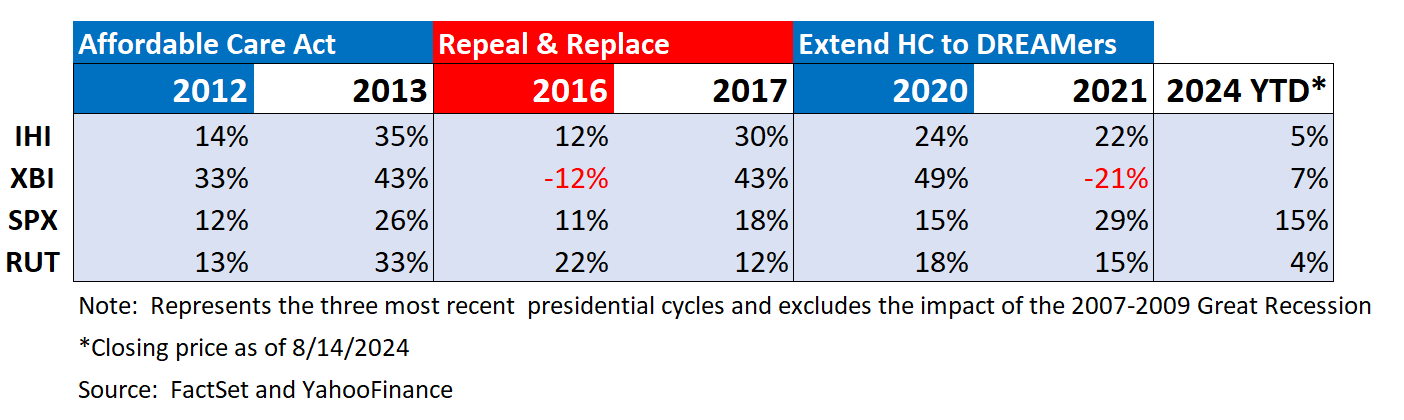
With the 2024 Election rapidly approaching, we took a look at the impact of the last three election cycles on the MedTech and Biotech industries. Given recent headlines, this 2024 election cycle – especially as we approach the final stretch – is already unlike many that we have seen in recent history.  As such, there is no telling if past precedence will yield similar results. Regardless, in a review of the US Medical Devices ETF (IHI), the S&P Biotech ETF (XBI), the S&P 500 (SPX) and the Russell 2000 (RUT) over the course of each election year since 2012, there are some trends of note.

  • Both the IHI and XBI outperformed the broader markets in the 2012 and 2020 election years, which yielded Democratic presidents, and underperformed in the 2016 election year of Republican candidate Donald Trump.
  • In the year following the 2012 and 2016 election, regardless of the healthcare agenda, the IHI and XBI both drastically outperformed broader markets. In the year following the 2020 election, both the IHI and XBI underperformed the S&P 500 in a post-COVID-19 pandemic return to normalcy.
  • In each of the last three election cycles, investor uncertainty created an overhang across all four indices leading into November, which quickly rebounded after the election.
  • The last 3 election periods benefitted from low inflation and interest rates, with candidates and agenda well established heading into the conventions.

As we head into the November 2024 elections, there are many unknowns, particularly for the Democratic party.  In comparison, the Republican party has proposed the following in its healthcare agenda:

  1. A requirement for federal agencies to purchase medicines and medical devices manufactured in the U.S. and bars foreign federal agencies from purchasing “essential” drugs; and
  2. A potential executive order saying the government will only pay pharmaceutical companies “the best price they offer to foreign nations.”

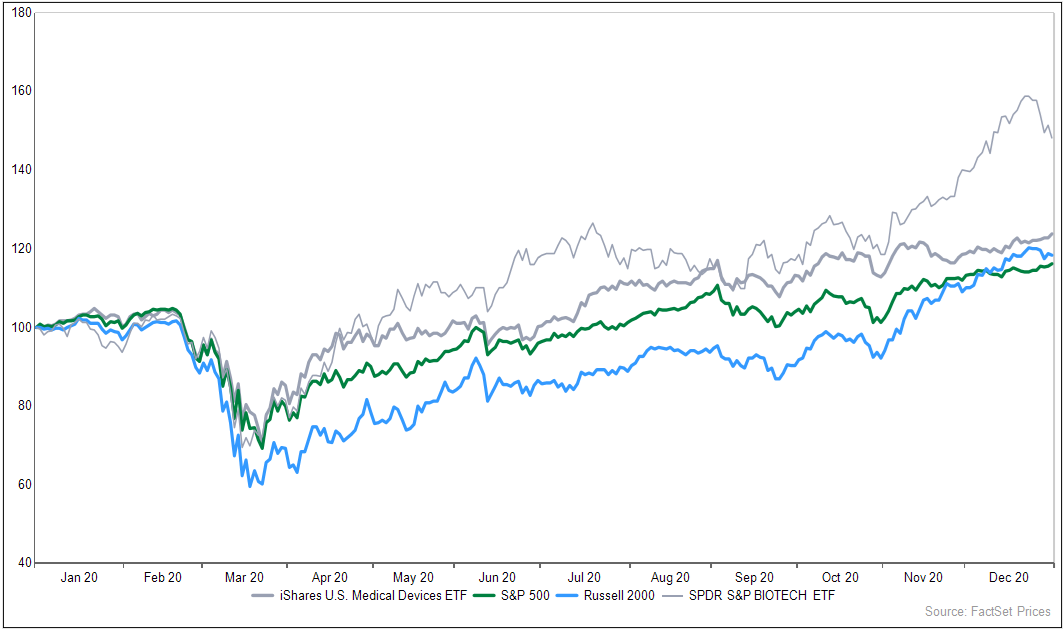
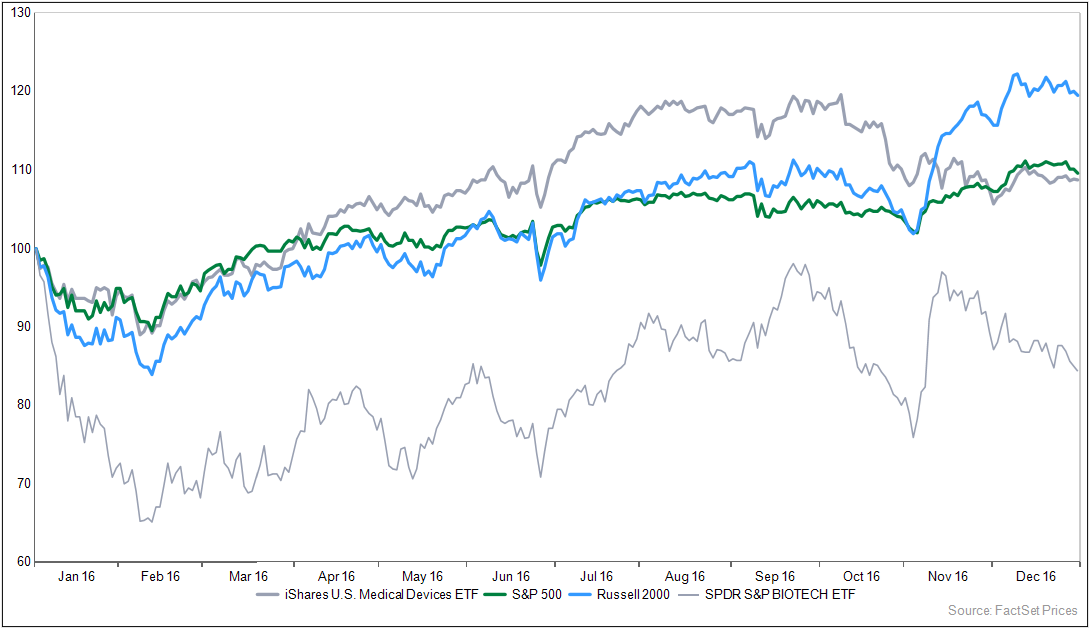
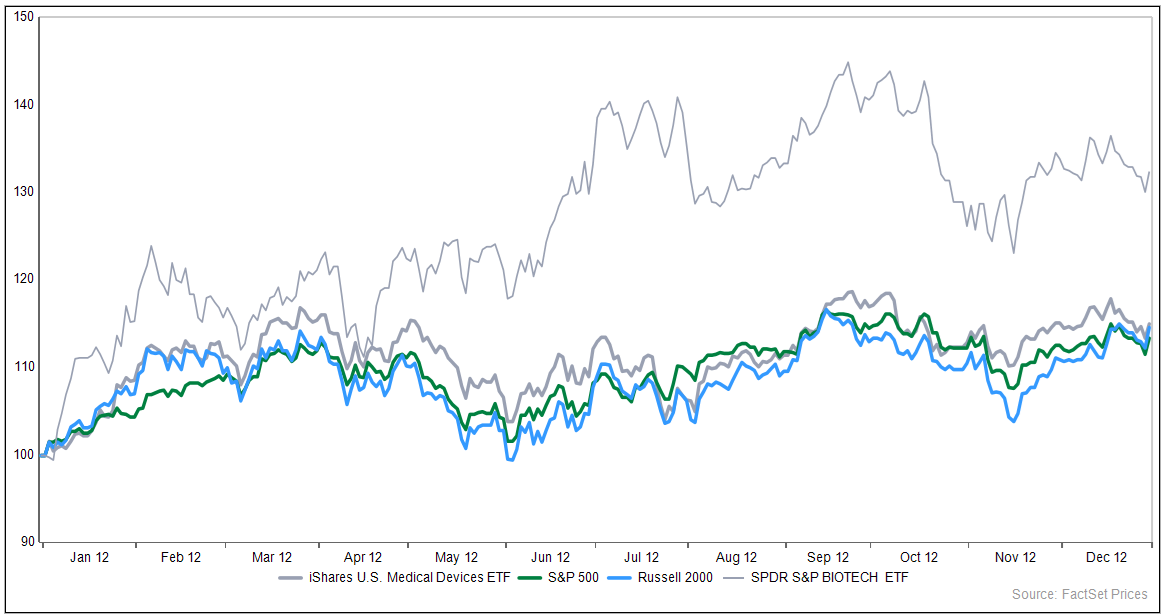
Below, we highlight charts indexing the IHI, XBI, SPX, and RUT over the course of the three most recent presidential election cycles.


2020 – Party: Democrat
Healthcare initiative per candidate: Trump = rollback of the affordable care act. Biden = extend coverage to DREAMers

2020 was a unique year given the pandemic that began in early March. In terms of healthcare policy, Trump vied for a rollback of the affordable care act while Biden looked to extend healthcare coverage to DREAMers.

For Biotech, 2020 was an exceptionally strong year, fueled by demand for the rapid development of COVID vaccines, and saw valuations reach historic highs as generalist funds bought into innovative therapeutics. However, after Donald Trump failed to secure the re-election and the Democrats gained unified control of the Congress and presidency, fund flows sharply reverted. From its peak in early February 2021 through mid-February 2022, the XBI was down 49%, led by smid-cap Biotechs, in a post-pandemic return to normalcy.


2016 – Party: Republican
Healthcare initiative per candidate: Trump = complete repeal of Affordable Care Act. Clinton = maintain and build upon Affordable Care Act

The 2016 election saw Hillary Clinton face off against Donald Trump, each looking to enter the office for the first time. Donald Trump ran on the idea of a complete repeal of the Affordable Care Act that former President Barack Obama championed. Hillary Clinton on the other hand looked to maintain and build upon the Affordable Care Act.

Heightened political and regulatory uncertainty surrounding drug pricing and healthcare policy leading up to the 2016 elections created an overhang on the Biotech sector, particularly in the weeks just before the election when a Democratic victory appeared likely. However, the overhang was abated with the Republican sweep in the executive and legislative branches, along with the rejection of Proposition 61 in California, resulting in the XBI gaining over 15% in the week following the election results.


2012 – Party: Democrat
Healthcare initiative per candidate: Obama = Fully implement Affordable Care Act. Romney = more limited regulation, buy health plans in individual markets

Barack Obama ran for his second term in 2012 and ended up defeating the republican challenger Mitt Romney. As it relates to healthcare, Obama looked to fully implement the Affordable Care act while Romney sought more limited regulation and buy health plans in the individual markets.

Biotech was the best performing healthcare subsector in 2012 and the presidential election had a relatively muted impact on performance. An Obama victory ratified the status quo and alleviated any uncertainties related to a full repeal and reform of the Affordable Care Act.


In Summary
With the potential for increased market volatility in the coming months ahead of the 2024 election, investor focus continues to center on business execution. For help in strategic positioning and investor relations planning for upcoming election cycle, please do not hesitate to reach out to the team at Gilmartin Group.

Gilmartin Group has extensive experience working with both private and public companies across the MedTech and Biotech spaces. To find out more about how we strategically partner with our clients, please contact our team today.

Authored by: Jack Droogan, Associate, Vivian Cervantes, Managing Director & Claire McCardell, Associate Vice President, Gilmartin Group

MedTech IPO and Capital Markets Perspectives

Gilmartin Group hosted 2 events in July focused on MedTech capital markets activity.  Early in the month, our team co-sponsored a MedTech IPO Summit with Piper Sandler focused on IPO readiness and potential drivers of an upcoming acceleration in both private and public capital markets activity. This past week, we hosted a similar conversation with leaders of J.P. Morgan’s healthcare investment banking team to discuss today’s market environment and investor sentiment toward emerging growth opportunities. Despite the fact that there have been ZERO MedTech IPOs in nearly 3 years, both JP Morgan and Piper Sandler teams see reasons for optimism that a MedTech IPO window may open up in the near-to-mid-term.

Banker Viewpoints on a Potential Resurgence in IPO and MedTech Capital Markets Activity:

  • Tens of private MedTech businesses (as many as 40 companies, according to bankers) meet traditional IPO-readiness criteria – for example: commercial-stage with proven technology; targeting large, underserved market opportunities; beginning to generate revenue at scale; and able to forecast a line of sight to profitability.
  • Most private company valuations have now reset to align more closely with today’s public market multiples (i.e., many businesses have now bridged the valuation gap from prior financing activity at 2019-2021 peak-industry-multiples, and have completed a flat-to-down round that re-bases valuation prior to a potential public offering).
  • Large, long-only investment funds are deploying capital in later-stage MedTech companies and stating a desire to invest in new opportunities (especially following a wave of M&A which has taken, or is planned to take, several companies out of the SMID MedTech “investable universe” – such as Axonics, Shockwave, and Silk Road Medical)  
  • Many LPs are over-indexed to private relative to public companies and need liquidity – it is likely that they will encourage, or at least be supportive of, a public market exit opportunity for their portfolio companies should a window open.

Please reach out to us to discuss specific takeaways and implications for your business.


The MedTech Sector IPO Outlook – High Level Thoughts from Piper Sandler’s Healthcare Team:

  • The valuation environment has stabilized:
    • High-growth MedTech valuations have been cut in half from mid-2021 highs, but current EV/ NTM revenue valuations are now in-line with 15-20 year averages, which bankers believe is a healthy level for IPO activity to resume
    • According to Piper Sandler data, most IPOs in the last MedTech IPO cycle were priced at a 40-50% discount to the median multiple of high-growth, publicly traded MedTech peers. However, bankers see several reasons to believe that the relative discount for IPO candidates to their publicly-traded peers will be narrower going forward:
      • The relative scale and maturity of businesses today, relative to prior classes
      • The specific companies, technologies, and market opportunities in today’s potential IPO candidates
      • Strong revenue trajectories (could incentivize investors to look further out)
      • Potential positive market sentiment post US election
      • Interest rates declining
      • Strong execution from most high-growth Med Tech peers (comps are important)
      • Positive / above-street FY 2025 guidance from public peers in early January
      • Continued acceleration of M&A – especially of growth companies!
  • Business attributes of successful MedTech IPOs have included, and will likely continue to include:
    • Large TAM
    • Technological differentiation
    • Strong, differentiated clinical data
    • Strong value proposition to key stakeholders
  • Key metrics from successful MedTech IPOs of the last cycle
    • Revenue scale – typically seen by investors as over $20-30M in LTM sales, but business-dependent
    • Double-digit revenue growth (bankers believe at/above 20-30% growth is appropriate to be benchmarked with other high-growth public MedTech peers)
    • Strong gross margins – ideally, in-line or above public peers at 60-80%, or having a clear and achievable near-term pathway to gross margin improvement
    • Having a pathway to cash-flow breakeven – ideally from IPO proceeds
    • Led by a strong, experienced, and communicative management team
    • Bankers believe that the next cluster of IPO companies will likely face higher expectations than IPOs from the last cycle, but offsetting this, investors may be willing to be pay a closer-to-public-market-multiple for businesses that do meet / exceed the above criteria 
  • Critical considerations for IPO preparation and execution:
    • It is important for management teams to offer a compelling overview of their progress across the above attributes. Concerns or “missing attributes” will not necessarily prevent a company from successfully going public – but the company must be prepared to articulate their status and plan transparently
    • Be prepared on all fronts as though you’re a public company – institute processes and rigor several quarters ahead of your public-market debut. For example, host a mock 10-Q drafting and quarterly earnings call messaging session. In addition, map out your financial guidance strategy and key non-financial metrics for success (KPIs)
    • Build a thoughtful, reasonable, and consistent engagement plan to meet with public investors (through conferences, non-deal roadshows, etc.)
    • Build out internal and external teams (executives, board of directors, counsel, auditors, etc). This is critical for an IPO process and especially true if exploring a dual process (IPO / potential acquisition). Give yourself the appropriate time and bring on expert partners to execute planning activities on both fronts. Preparedness pays off!

Q&A with J.P. Morgan’s Annie Wernig & Benjamin Burdett:

What can open the IPO market for growth MedTech companies & keeps that window open? What is investors’ capacity / appetite for new issues? 

  • Despite headwinds, there’s significant pent-up investor demand for the next great high growth MedTech that can go public & be successful. We have not seen a MedTech IPO in 3 years. It’s now been a long time coming.
  • Everything we know suggests there may be some upcoming activity and investor engagement.  
  • However, the bar is high. Everyone wants to see the first couple of transactions have bulletproof profiles (check all the boxes) and perform well afterwards. If we can string together a handful of those transactions, we believe the market will open up significantly.
  • If not in Q4, we could certainly see this in 2025. There is risk to this outlook – if the first transaction(s) struggle or tumble, that could also close the IPO window again quickly and set the sector back.

What is that bulletproof profile? How do you think it differs from the last MedTech IPO window? 

  • In many ways, MedTech hasn’t changed. Investors still have an expectation for growing revenue and a line of sight to profitability (think: couple hundred million in revenue within the next couple of years). That number goes up in this environment.
  • The market opportunity needs to be sufficient to allow for multiple years of strong, durable growth.  
  • Having good investors to support the transaction is positive, but not a requirement.
  • Management that has established themselves with credibility and shown clear handle with predictability.  
  • Put together a model with cadences that investors look for – funds want to deploy capital in businesses that execute well, beat their forecast, and consistently raise estimates.

What is your advice to private companies on sharing forward-looking estimates vs. keeping estimates internal? 

  • If you’re fundraising, you need to share financial forecasts. Very rarely do we see fundraising without it.
  • Work to build and refine your plan. Run a comprehensive scenario analysis (base case and what could drive downside / upside to your model) as you make decisions about communicating your profile. 
  • In conference presentations and other high-level meetings, act carefully on projections. We would not put projections out there that could be held against you in the future. Investors have long memories.  
  • Talk with attorneys and advisors if you’re close to an IPO and planning to provide projections, especially if using projections that were part of a private funding round.

What are the key components to syndicate construction? How many advisors / underwriters should a company bring on?  

  • Companies should have at least one lead advisor to quarterback the process. Whether you have one single lead or two to quasi-lead is a matter of preferences.  
  • Another objective is positioning to have thoughtful, high-quality analyst research coverage following the transaction.
  • We don’t believe that there’s a firm maximum number of firms that companies should work with. It’s about bringing on the right capabilities and support frameworks.  
  • Understand each of your syndicate members’ value-add.

What closing thoughts / high-level advice do you have for companies that are trying to finance and looking for options?  

  • Regardless of whether you need capital, run rigorous scenario analysis processes (i.e., imagine your operating plan stays the same and gets worse / better). Invest time and do the work to understand your full menu of options (strategic or financing) based on those scenarios.
  • Even if you’re not doing a deal today, it makes sense to interact & understand what leading groups of investors are interested in your story, and what those investors could provide. Have a pulse on what’s available.  
  • Engage with the right partners throughout your life cycle. Don’t get bogged down with details / discussions / potential due diligence that may not lead anywhere.
  • If and when capital is available, to the extent that everyone can get comfortable around the table, take incremental capital to get to the next corporate event or catalyst with a buffer. Don’t have a razor-thin path to achieving your next milestone.  
  • Manage your business & maintain flexibility, where possible. Be prepared.

Gilmartin Group has extensive experience working with both private and public companies across the MedTech space. To find out more about how we strategically partner with our clients, please contact our team today.

Authored by: Marissa Bych, Principal, Gilmartin Group

The Current State and Outlook for Value-Based Care Across Healthcare Services and Tech

On July 11th, 2024, Gilmartin Group held a webinar discussing the current state and outlook for value-based care (VBC) across the healthcare services and tech space, featuring speakers Sean Dodge, Director, Healthcare IT & Digital Health at RBC Capital Markets, and Jailendra Singh, Managing Director, Healthcare Services & Digital Health at Truist. Below are the key takeaways from that discussion.


KEY TAKEAWAYS:

The State of Value-Based Care and Investor Sentiment
Volatility throughout the overall market, and elevated medical cost trends exacerbated by reduced claims visibility due to the Change cyber-attack have brought VBC companies under the microscope. The bull case suggests that current challenges in VBC are merely a result of mispriced risk, rather than fundamental flaws in the model itself, indicating a transient issue. Furthermore, it’s conceivable that just one contracting cycle could be sufficient to reprice and address current imbalances. Conversely, the bear case argues that generating durable cost savings through VBC remains difficult, with skeptics doubting that the Centers for Medicare & Medicaid Services (CMS) will allow the current situation—where Medicare Advantage plans and associated entities are generating outsized margins—to persist. Investor sentiment among long-only investors who entered the space 12-18 months ago has since become more muted, leading to an increased presence of hedge funds. However, lower valuations in the sector are now attracting more generalist investors who previously shied away due to high valuations, broadening the investor base. Fundamentally, the shift from fee-for-service to VBC effectively aligns stakeholders, and VBC is likely here to stay, albeit with some bumps along the road.

Messaging Competitive Differentiation & Investor Sentiment
Investors are primarily focused on three key areas: gaining clear visibility into medical cost trends, emphasizing per-member-per-month (PMPM) margin improvements, and understanding the implications of increasing market penetration in the space. VBC companies should hone their messaging around strategies to better manage medical costs, which could include investments in robust infrastructure and technology, along with increased patient engagement. Additionally, the industry is now recognizing that prioritizing overall PMPM margin over purely increasing funding PMPM is essential for long-term success. This realignment coincides with a change in investor focus towards capital-light strategies, driven by higher interest rates over the past 18-20 months and a desire for quicker paths to profitability. At the same time, the market for VBC models continues to expand, with numerous risk-bearing options available for physicians amongst a large available whitespace. The diversity of VBC models, combined with a relatively low penetration necessitates a nuanced understanding of the different segments and their potential sizes.

The Not-so-Distant Future of VBC
The future of value-based care is evolving rapidly, with a notable proliferation of specialized private companies in areas like chronic kidney disease (CKD). While the public landscape remains primarily focused on primary care, with exceptions like Evolent Health’s specialty care focus in oncology and musculoskeletal care, there’s growing interest in outcomes-oriented models targeting high-cost areas for payers. As the industry progresses, pay-viders and VBC platforms are increasingly developing and relying on technology. Healthcare IT companies are playing an increasingly important role in offering a variety of solutions that target areas like risk-bearing enablement, risk scoring, clinical decision-making support, clinical effectiveness measurement, payment integrity, and revenue cycle management, to name just a few. This technological focus extends to enhancing existing processes, as evidenced by recent acquisitions from companies like Evolent Health and Agilon, which aim to improve data ingestion, system integrations, and documentation efficiency. Of course, Artificial Intelligence (AI) is a key piece of innovation that will drive a reduction in costs and waste while enhancing clinical and operating productivity. The industry is also seeing a heightened level of excitement around Centers of Excellence (COE), indicating a shift towards specialized, high-quality care models. 

Private Funding Market and Sentiment in the IPO market
The funding environment for VBC companies in private markets remains robust, despite public market fluctuations, as investors tend to adopt a longer-term perspective rather than focusing on quarter-to-quarter results. This long-term orientation aligns well with the gradual nature of healthcare transformation and the ongoing refinement of VBC models. The IPO market has been the subject of cautious optimism in recent months, with many industry observers eagerly anticipating a resurgence in public offerings. Waystar’s one-billion-dollar raise has been viewed as a promising restart for the IPO market, and as the metaphorical ice begins to break, there’s growing anticipation for increased IPO activity in the latter half of the year. However, the success of this potential wave of IPOs hinges on the reception of the initial companies going public. This initial cohort needs to demonstrate strong financial health, with a particular emphasis on current profitability rather than promises of future gains. Investors and market analysts are focused on unit economics and clear paths to profitability as these factors will likely set the tone for subsequent offerings and overall market confidence.


Overall, while the current public market for services and tech companies in the VBC space remains volatile, the long-term prospects of VBC remain positive. The industry is adapting to new market realities, with a shift towards capital-light strategies, profitability, and specialized care models. Technological innovation and improved data analytics are driving efficiency and effectiveness with a prevailing view that there’s still significant room for growth, particularly in specialized and high-cost care segments. As the IPO market cautiously reopens, the success of initial offerings will be crucial in shaping investor confidence. VBC continues to align with the broader goals of improving healthcare outcomes while controlling costs, positioning it to play a pivotal role in the future of healthcare delivery.

Gilmartin Group has extensive experience working with both private and public companies across the Digital Health & Healthcare IT space. To find out more about how we strategically partner with our clients, please contact our team today.

Authored by: Max Forgan, Associate, Gilmartin Group

Biotech Sector Trends: The Return of the PIPEs in 2024

Market volatility in the biotech sector is likely a product of macroeconomic headwinds

The biotech capital markets came in hot to kickstart 2024 with 6 IPOs listed on NASDAQ or NYSE in the months of January and February. However, investor optimism started to dissipate as the momentum faded, with only 3 additional biotech IPOs since February. It will likely be some time for market conditions to stabilize after the post-COVID surge of 100+ biotech IPOs, raising a total of $15 billion in 2021. Today’s market conditions have yielded some biotechs withdrawing their IPOs from the stock exchanges last minute. It’s no surprise that the majority of biotech IPOs in 2024 are trading below their initial offering price, aside from select market outperformers such as CG Oncology, Contineum, and Rapport.

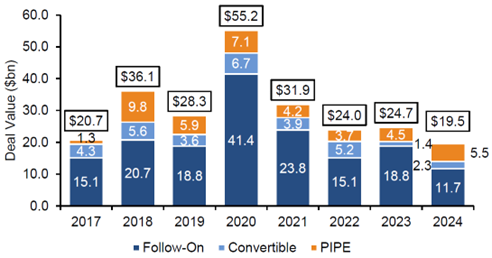
While there may be sector specific factors leading to heightened market volatility, much of the unpredictability is a product of the macroeconomic headwinds of the Fed’s restrictive monetary policy, geopolitical tensions, and a major presidential election looming around the corner. As fresh powder is drying up, companies are now starting to tap into alternative methods of financing. According to data from Evercore, U.S. biotechs have raised $5.5 billion through private investment in public equity deals, commonly known as PIPEs, in 2024.


Source: Evercore


The return of the PIPE transaction in 2024
A PIPE is a private placement transaction in which accredited investors buy publicly traded shares at a price that is often discounted to the current market price in exchange for illiquid shares. Companies are required to register the shares from the PIPE through filling a resale registration statement usually within 30-60 days of the offering. The transaction is more efficient and has a lower fee compared to registered offerings. This is a result of the lower regulatory burden with the Securities and Exchange Commission (SEC) since the shares issued do not need to be registered immediately.

These accredited investors often include institutional investors such as hedge funds, pension funds and specialist investors. Historically, PIPEs have been limited to distressed companies that have run out of options and need capital to stay afloat. However, the PIPEs of 2024 have returned with a different flavor with many pricing at a premium to market price, stemming from strong investor demand, often based on positive clinical trial results.

PIPEs go against the spirit of the capital markets” – Undisclosed investor
While PIPEs have gained popularity among some biotech investors, the investment community is divided on this ethical dilemma. The process of a PIPE transaction involves a public company engaging a placement agent or investment banker who will identify, and wall cross select accredited investors to share non-public information, often consisting of an early look at clinical trial results. This poses a controversial question keeping some of us awake at night: “is inequity of access fair?” Why are select investors able to participate in these transactions while others are left on the sidelines?

Some investors reason that it’s unfair to offer highly coveted non-public information to select individuals, as this results in unequal access to privileged information when making important investment decisions. In certain cases, existing shareholders don’t even have the opportunity to participate in the deal. Critics of this financing strategy say that these kinds of transactions hurt the biotech sector because the unlevel playing field that it cultivates goes against the spirit of the stock market.

By that logic, the same could be said for any confidentially marketed deal, such as a registered direct offering or confidentially marketed public offering (CMPO). All of these options provide select individuals an early look at data and an upper hand over those who did not make it across the wall. Where PIPEs differ from other confidentially marketed deals is that only a select couple dozen specialist biotech investors end up controlling the majority of the deal flow in the sector.

PIPEs attract specialist investors to a company’s shareholder base and potentially result in open market buying
PIPEs provide an avenue to the cap table for funds that may not have otherwise invested in the company due to liquidity constraints associated with open market buying. Often times, these are specialist biotech investors that truly understand the value of the data and are looking to take large positions. Adding this type of diversification to the company’s shareholder base gives the rest of the investment community conviction to potentially buy the stock in the open market. I emphasize potentially as the market reaction is tough to predict and it can be a challenge to differentiate if third-party validation or the concurrently announced positive data was the market mover. 

PIPEs mitigate market risk in the face of uncertainty
One of the biggest challenges with data driven catalysts is that the stock market does not have a logical flow. Even when companies release clean data which many would determine is universally positive, the hamster wheel of emotion of the capital markets has a mind of its own.

The strategic advantage of completing a PIPE transaction is that market risk is mitigated along with any financing overhang. For companies that have more complex data, generalist and retail investors will need more time to digest their stories. During a PIPE, specialist investors conduct extended diligence on the deal, and their participation serves as external validation prior to exposure to the market. This attenuates the risk of data getting lost in muddy waters and gives companies who may have otherwise not have been able to move forward a fighting chance.

Does information asymmetry facilitate market manipulation?
There has been controversy over the years around PIPEs facilitating the grounds for market manipulation. In April 2024, the controversy took the spotlight when an investor sued Taysha Gene Therapies for insider trading. The lawsuit claimed that company insiders manipulated the timing of positive data disclosures for a drug used to treat Rett syndrome. This was timed with a PIPE deal that took place in August 2023 resulting in a quadrupling of the stock price and $205 million in immediate gains.

Events like this have led PIPEs to be under high scrutiny by the SEC. There have been cases of hedge funds violating U.S. federal securities laws by participating in a PIPE deal to cover shares the fund shorted in anticipation of the PIPE offering. Another phenomenon known as “shadow insider trading” occurs when investors who have been wall crossed use that information to make an investment in competitor companies.

In the biotech sector, data will always be king (or queen)
Whether it be alternative or conventional equity-raising methods, data is the only thing in the biotech industry that provides optionality for raising capital. Now more than ever we are seeing a drop in opportunistic financings as investors allocate their resources towards catalyst driven deals. Every company is different, and the strength of the data is paramount to understating what method of financing is most suitable.

For example, if a company has grand slam data, a PIPE transaction may limit potential upside in valuation. In a PIPE, companies are providing investors with a free call option and stock at a discount. On the other end of the spectrum is a publicly marketed deal where the company announces the proposed public offering concurrent with the data. This provides an opportunity for the market to react positively, the share price to shoot up and the potential to raise capital at a higher stock price with less dilution. Viking Therapeutics and Vaxcyte’s latest deals this year are prime examples of this financing strategy.


While it’s impossible to predict how the market will react to data, the level of conviction that management teams have on the strength of their data will guide their risk tolerance in the capital markets. The key is mapping out scenarios to provide optionality for different financing strategies and maintaining agility throughout the process. All biotech companies are in a perpetual state of fundraising and its never too early to start planning your next financing.

Gilmartin Group has extensive experience working with both private and public companies across the biotech space. To find out more about how we strategically partner with our clients, please contact our team today.

Authored by: Kiki Patel, Principal, Gilmartin Group